


/file/publisher-c1a3f893382d2b2f8a9aa22a654d9c97/2024/03/165700d238c148e889dd839fef70725b.jpg)

Suhakam flags due process issues in raid on men's wellness centre
Suhakam said the Nov 28 raid at a wellness centre in Kuala Lumpur, resulting in the arrests of over 200 men, has raised questions about due process, legal safeguards, and the treatment of detainees.
In a statement today, the human rights commission asked why police made the mass arrests when there was no evidence to help them pursue the case.
Summary
Suhakam questions why more than 200 men were arrested despite the absence of identifiable victims and no evidence to support charges.
It stresses that disciplinary action against civil servants must follow strict procedures under the 1993 regulations and Article 135(2).
It also condemns the exposure of detainees’ personal identities as a breach of privacy and dignity.
Suhakam said the Nov 28 raid at a wellness centre in Kuala Lumpur, resulting in the arrests of over 200 men, has raised questions about due process, legal safeguards, and the treatment of detainees.
In a statement today, the human rights commission asked why police made the mass arrests when there was no evidence to help them pursue the case, including identifiable victims.
"Doesn’t the hasty mass arrest constitute violations of Article 5 of the Federal Constitution that no person shall be deprived of his life or liberty, saved in accordance with the law?" it said.
It stressed that enforcement actions involving personal conduct must be grounded in verified information and credible evidence.
Earlier, Kuala Lumpur police chief Fadil Marsus said that the authorities could not charge any of the detainees, as none of them claimed to be victims of exploitation, prostitution, or unnatural sex.
According to news reports, the raid at the Jalan Raja Laut premises followed public tip-offs and a two-week surveillance. The men arrested were between 19 and 60 years old.
Kuala Lumpur deputy police chief Azani Omar was quoted as saying that intelligence gathered showed there were “immoral activities” at the premises involving gay men.
Those arrested included 80 Muslims and foreigners from South Korea, Indonesia, Germany, and China, he said.
Treatment of civil servants
With 17 civil servants among the detained, Suhakam stressed that disciplinary action must strictly follow the Public Officers (Conduct and Discipline) Regulations 1993, which outline fair and impartial procedures for investigations, show-cause processes and disciplinary inquiries.
READ MORE: MOHE officer nabbed in 'gay' sauna raid told to resign, but questions remain
The commission said this is reinforced by Article 135(2) of the Federal Constitution, which prohibits the dismissal or demotion of a civil servant without being provided a reasonable opportunity to be heard.
"These safeguards ensure disciplinary decisions are made fairly, based on facts and law, and not on premature assumptions or prejudices," it asserted.
After the raid, the Public Service Department (PSD) stated that Integrity Units are empowered to investigate public officers for alleged immoral or unethical behaviour.
Those found guilty under the Public Officers (Conduct and Discipline) Regulations may face firm action, including demotion or dismissal, PSD director-general Wan Ahmad Dahlan Abdul Aziz had warned.
Violation of privacy
Suhakam also expressed concern over reports that the identities of individuals involved in the raid had been exposed.
"The right to privacy and dignity must be protected throughout any investigation.
“Public disclosure prior to the establishment of facts may cause undue harm and is inconsistent with human dignity and human rights standards, including the principles reflected in the Universal Declaration of Human Rights," it said.
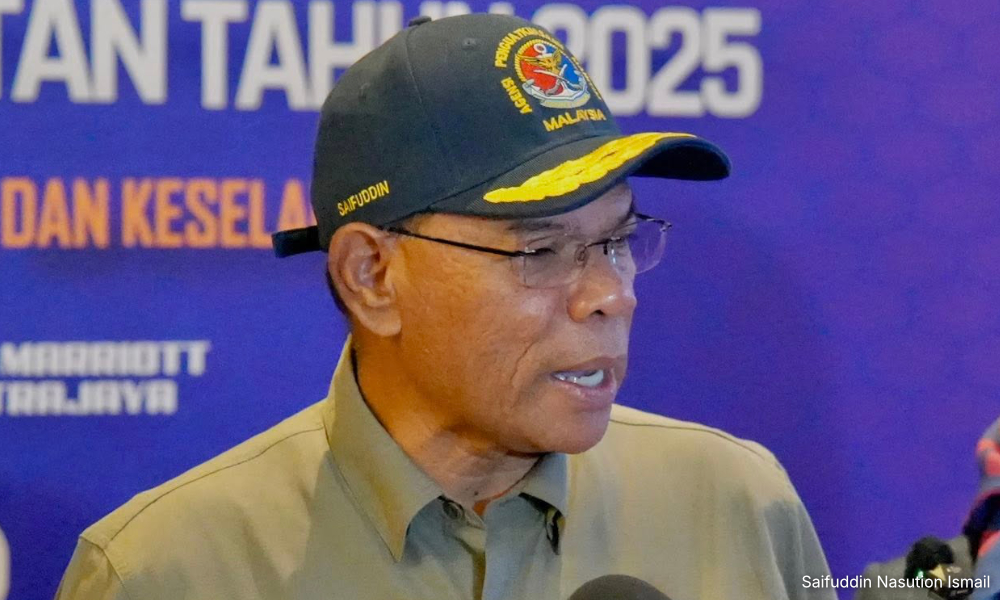
Home Minister Saifuddin Nasution Ismail had earlier defended the raid, saying that it did not violate the privacy of those arrested.
Safeguarding due process
Suhakam reiterated that safeguarding due process is essential and urged the authorities to carry out four key measures:
To ensure all investigations are carried out transparently, objectively, and based on verified evidence,
To uphold the rights of all involved, including civil servants, in line with the Public Officers Regulations and Federal Constitution,
To protect the identities of those involved until due process has been completed and findings are established, and
To assess all facts properly before initiating or prematurely concluding any disciplinary processes.
“(This is) not only to protect individual rights but also to maintain public confidence in enforcement and disciplinary institutions.
"Fair and transparent investigations and adherence to due process strengthen the rule of law and uphold the integrity of public service," it added.
/file/publisher-c1a3f893382d2b2f8a9aa22a654d9c97/2019/11/ae272057d31745954e2574d8cb5adb3b.jpg)
/file/publisher-c1a3f893382d2b2f8a9aa22a654d9c97/2020/11/5c2970d5f4df1d35891f7768cbb344bd.jpg)
/file/publisher-c1a3f893382d2b2f8a9aa22a654d9c97/2021/07/2bb63963204b55d2b4b7786ca791b443.jpg)
/file/publisher-c1a3f893382d2b2f8a9aa22a654d9c97/2025/07/17684388b9af871e3a68901acbfb4295.jpg)
/file/publisher-c1a3f893382d2b2f8a9aa22a654d9c97/2024/10/3b7fd5e8e5a5b89ba0497c4742cd4833.jpg)


Are you sure you want to delete this comment?
This action cannot be undone.